
Designing Contemporary Extensions for Period Properties
Extending an older building is one of the most rewarding, and challenging, projects in architecture.
It’s not just about adding space; it’s about telling a story that connects past and present. Done well, a contemporary extension can elevate the character of a historic property while adapting it to modern life.
If you’re considering an extension to a period home or heritage building, here’s how architects approach the balance between preservation and innovation.
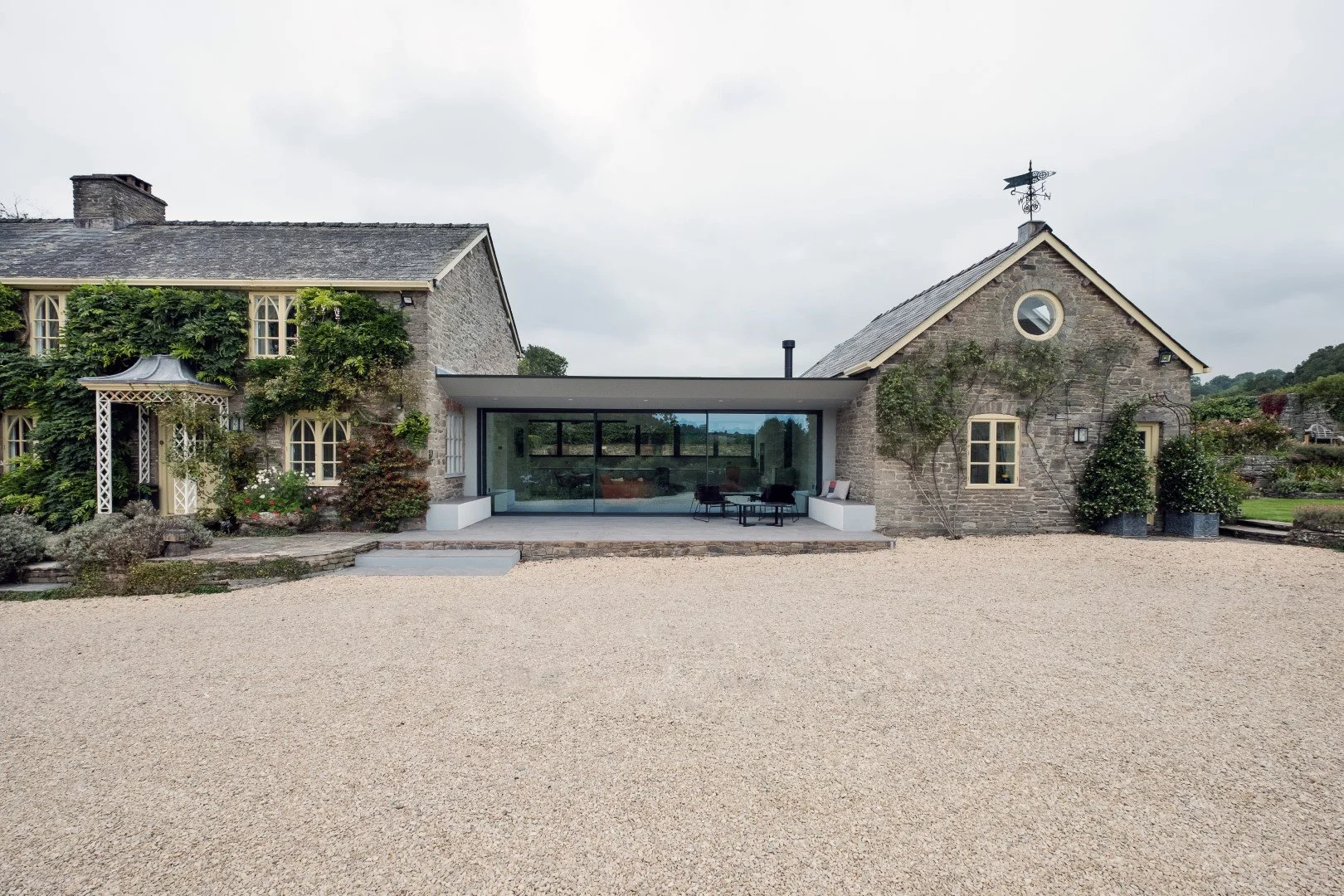
Respect the Original, But Don’t Imitate It
A common misconception is that new additions should replicate the old. In reality, copying historic details often results in a diluted, inauthentic outcome.
Instead, contemporary design celebrates contrast:
Clean lines against ornate detailing
Glass and steel alongside brick or stone
Minimal forms that highlight the richness of the original
This approach allows each part of the building to remain honest to its time, creating a dialogue rather than a disguise.
Prioritise Proportion and Scale
Even the most striking modern extension must fit. The key lies in proportion.
A successful design considers:
Roof heights and alignment
Window rhythms and spacing
Overall massing relative to the existing structure
A well-proportioned extension feels intentional, never like an afterthought.
Often, the most elegant solutions are modest in size but carefully composed.
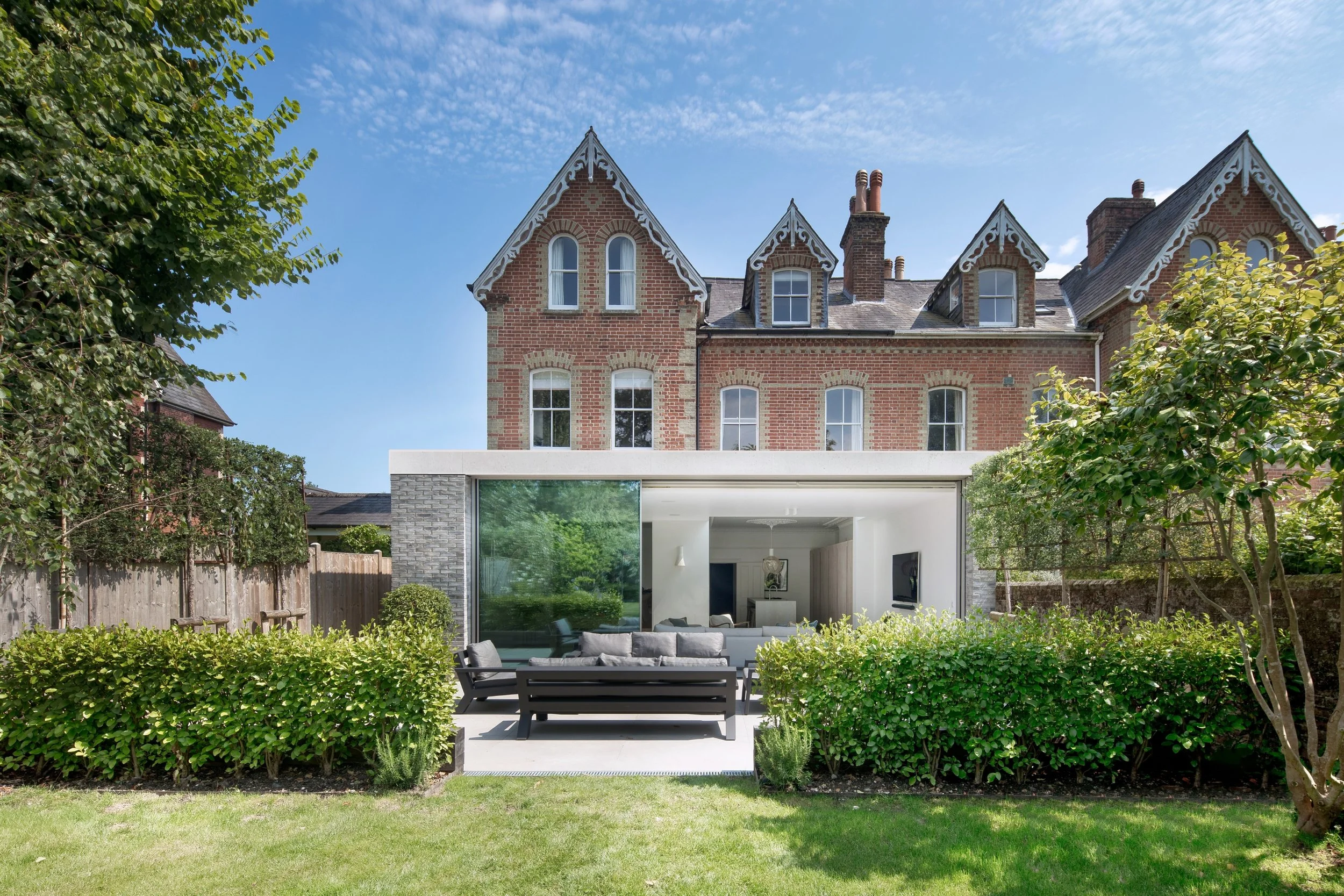
Use Light as a Connecting Element
Light is one of the most powerful tools in bridging old and new.
Architects frequently use:
Glass links to gently separate old and new structures
Rooflights to bring daylight deep into older floor plans
Large openings that frame views of original features
The result is a sense of openness that older buildings often lack without compromising their character.
Choose Materials Thoughtfully
Material selection is where the relationship between past and present becomes tangible.
Popular strategies include:
Complementary materials: Matching tones without copying textures
Contrasting palettes: Dark zinc, timber, or concrete against traditional masonry
Natural finishes: Materials that age gracefully alongside the original structure
The goal isn’t to compete with the old building, but to enhance it.
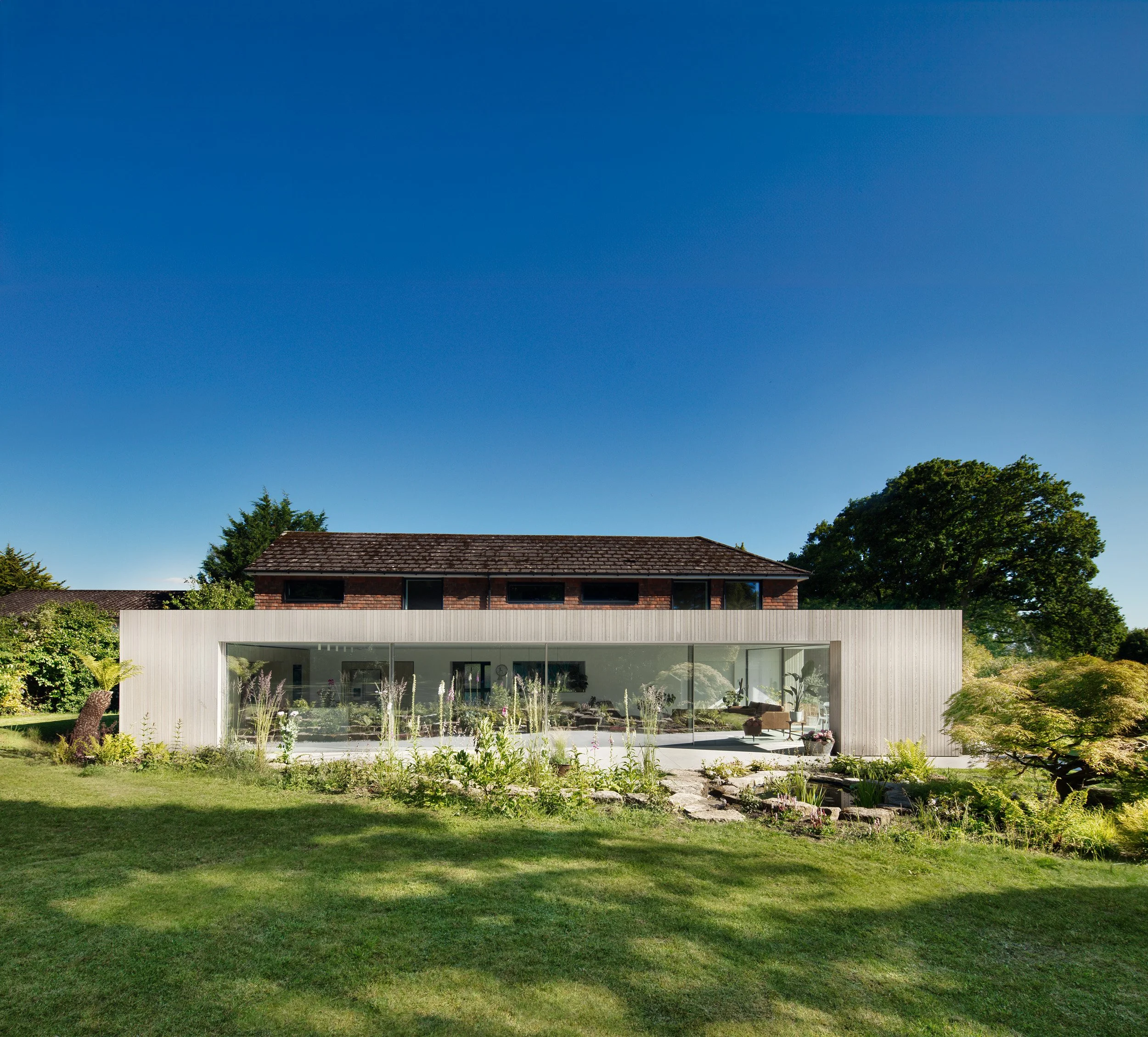
Design for Modern Living
While the exterior may celebrate contrast, the interior should feel cohesive and functional.
Modern extensions often introduce:
Open-plan kitchen and living spaces
Improved circulation between rooms
Strong connections to the garden
Enhanced energy performance
The aim is to transform how the building works for everyday life, while preserving what makes it special.
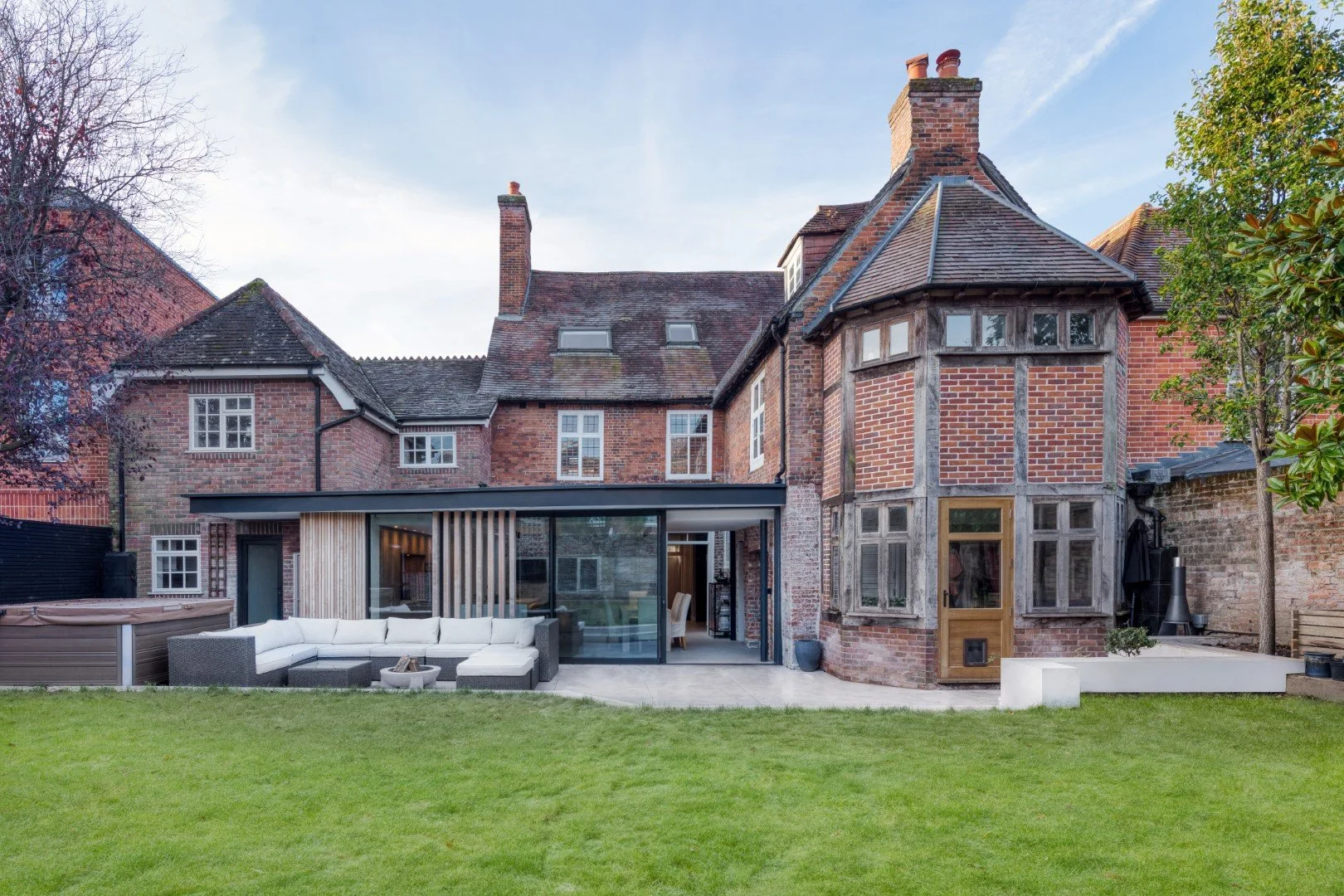
A contemporary extension is more than an addition, it’s an opportunity to reimagine an older building for the future.
The most successful projects don’t try to turn back time. Instead, they embrace contrast, celebrate craftsmanship, and create spaces that are both practical and inspiring.
If you’re considering extending your home, the key is thoughtful design: understanding the story of your building, and writing its next chapter with clarity and confidence.