
Buying Land to Build a Bespoke Home - What Should You Look For?
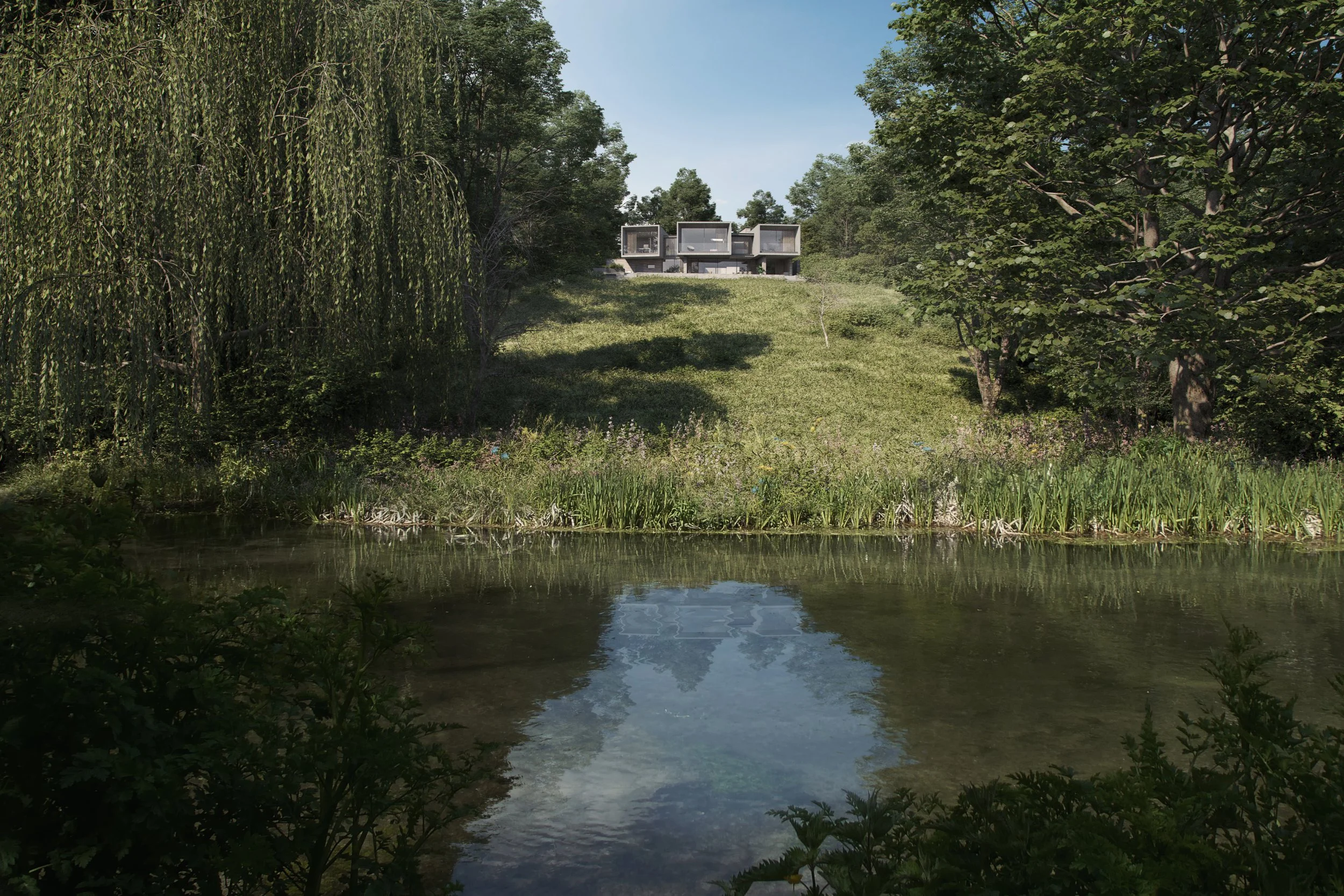
Buying Land to Build a Bespoke Home: What Should You Look For?
A guide to finding the right plot, understanding its potential and avoiding costly mistakes before you buy.
Buying a plot of land to build your own home is an exciting prospect. It offers the opportunity to create something entirely personal, a home designed around the way you live, the landscape you want to inhabit and the architectural qualities that matter to you.
But finding the right land is about much more than location, views and asking price.
A plot that looks perfect at first glance may present significant planning challenges, difficult ground conditions or restrictions that limit what can actually be built. Equally, a seemingly unremarkable piece of land could offer extraordinary potential when approached with the right architectural vision.
Before committing to a purchase, it is important to look beyond what is already there and consider what the site could realistically become.
Here are six things we believe you should look for when buying land for a bespoke home.
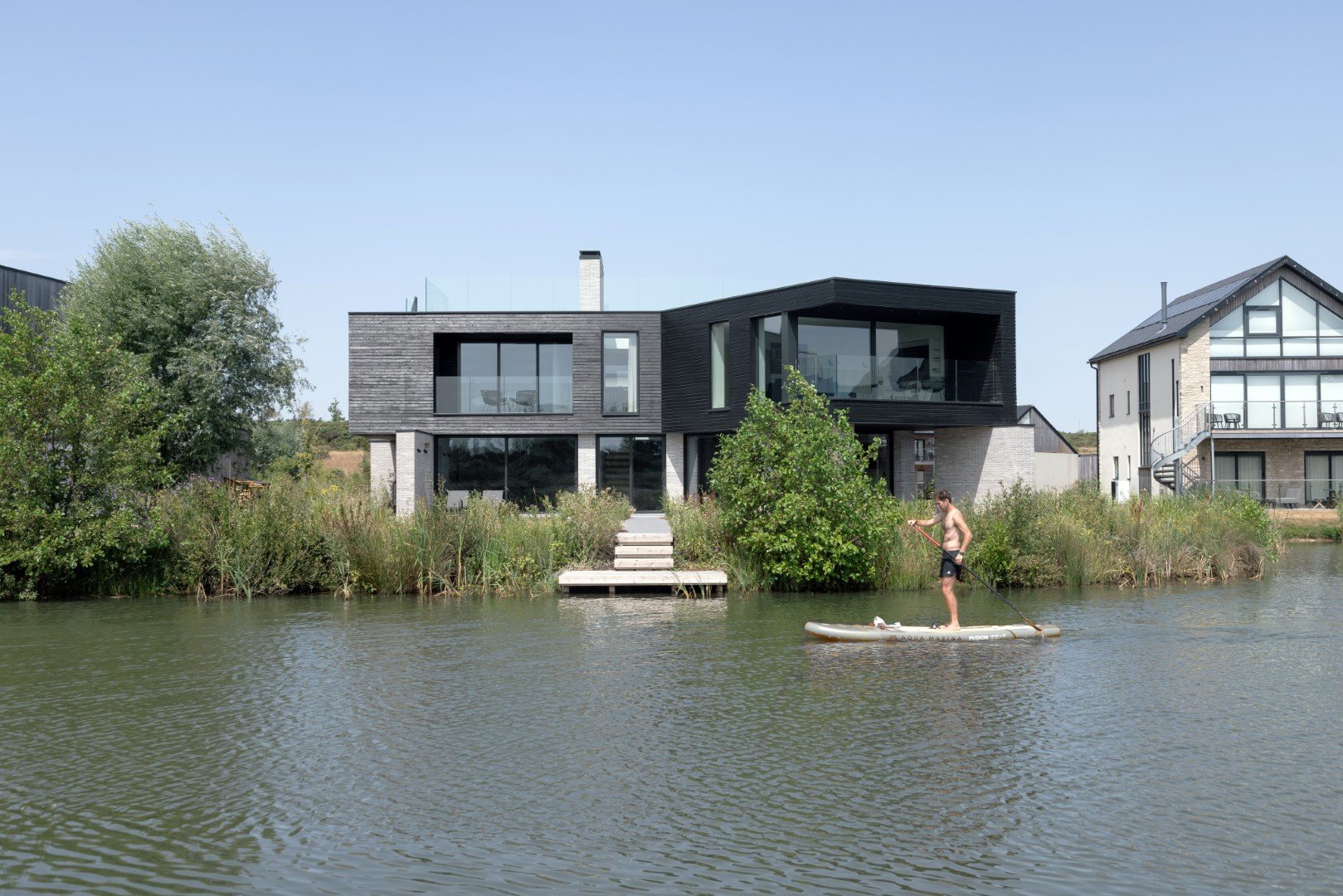
1. Understand the Planning Potential
Perhaps the most important consideration is whether you can actually obtain planning permission to build the home you want.
Land being advertised as having development potential does not necessarily mean it has a realistic prospect of securing consent. Equally, land without planning permission is not automatically unsuitable for development.
Start by understanding the site's planning history and its position within the local planning framework.
Consider whether the land is:
Within or outside an established settlement boundary.
Located within a National Landscape (formerly an Area of Outstanding Natural Beauty) or National Park.
Within the Green Belt.
Affected by conservation area or listed building restrictions.
Subject to ecological, landscape or other environmental designations.
Previously developed land or an agricultural site.
For particularly ambitious projects, there may be opportunities under specific planning policies. Paragraph 84 of the National Planning Policy Framework, for example, provides a route for exceptional new homes in isolated countryside locations, provided they meet an exceptionally high standard of architectural design and sustainability.
The important thing is to establish the planning position before purchasing the land, rather than discovering its limitations afterwards.
Our advice: Instruct an architect with experience of the relevant planning policies to undertake an initial assessment. A relatively small investment in professional advice at this stage could save you considerable time and money further down the line.
2. Look Beyond the View: Understand the Landscape
A beautiful view is an obvious attraction when buying land, but it should never be the only consideration.
The shape, character and natural features of a site can have a much greater influence on the quality of the finished home.
Look carefully at the topography. Is the land flat, gently sloping or significantly undulating? Where are the natural high and low points? Could a change in level create opportunities for split-level living, partially embedded spaces or elevated views?
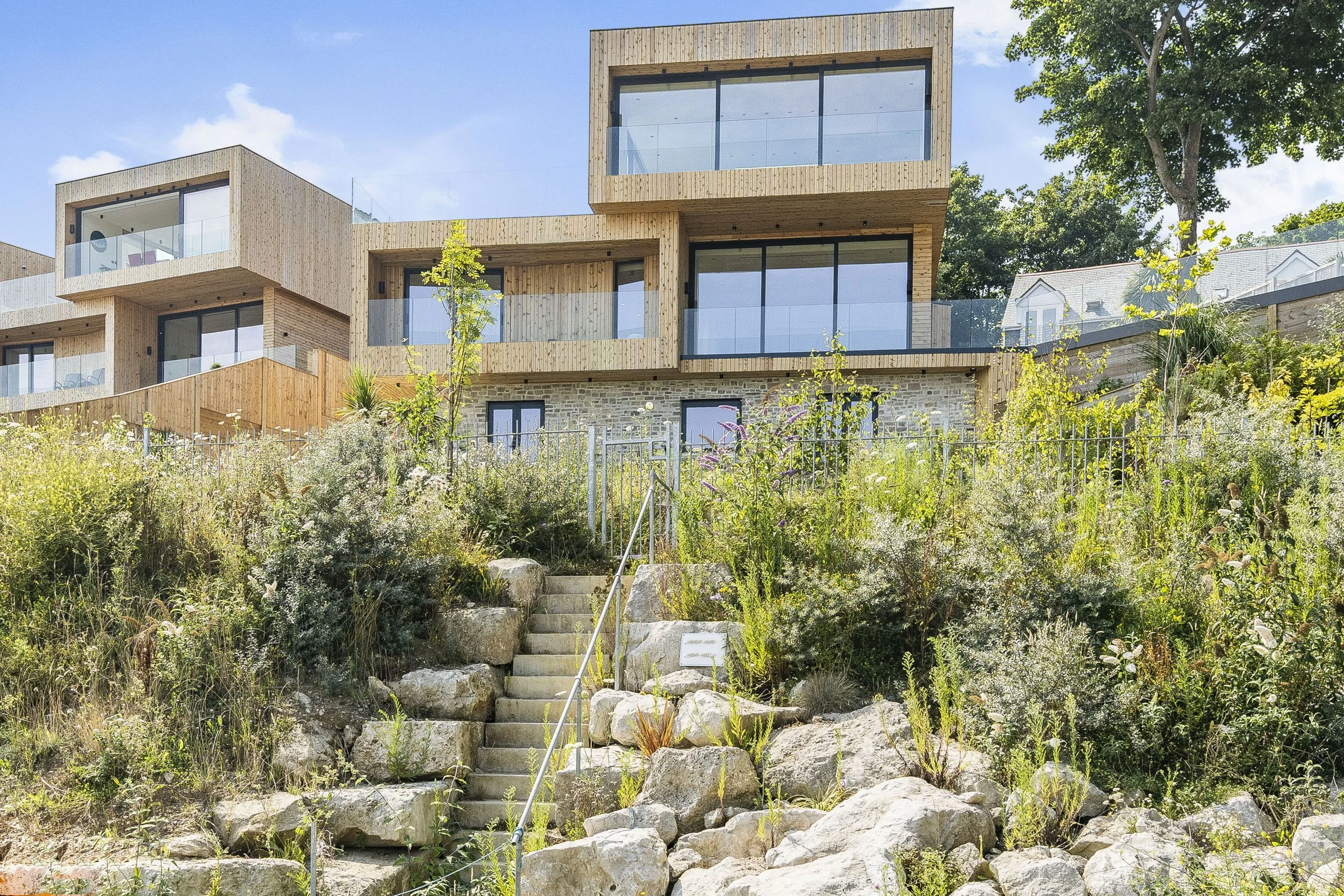
Sloping sites are often dismissed because they appear more difficult or expensive to build on. However, with thoughtful architectural design, they can produce some of the most interesting and distinctive homes.
Also consider existing trees, hedgerows, woodland and natural boundaries. These features can provide privacy, create a sense of enclosure and help integrate a new building into its surroundings.
At AR Design Studio, we take a landscape-led approach to architecture. Rather than imposing a predetermined design onto a plot, we look at how the land itself can inform the positioning, form and character of the building.
The best sites are often those that offer something distinctive, whether that is a dramatic change in level, an established woodland setting or an opportunity to create a meaningful relationship between the house and its surroundings.
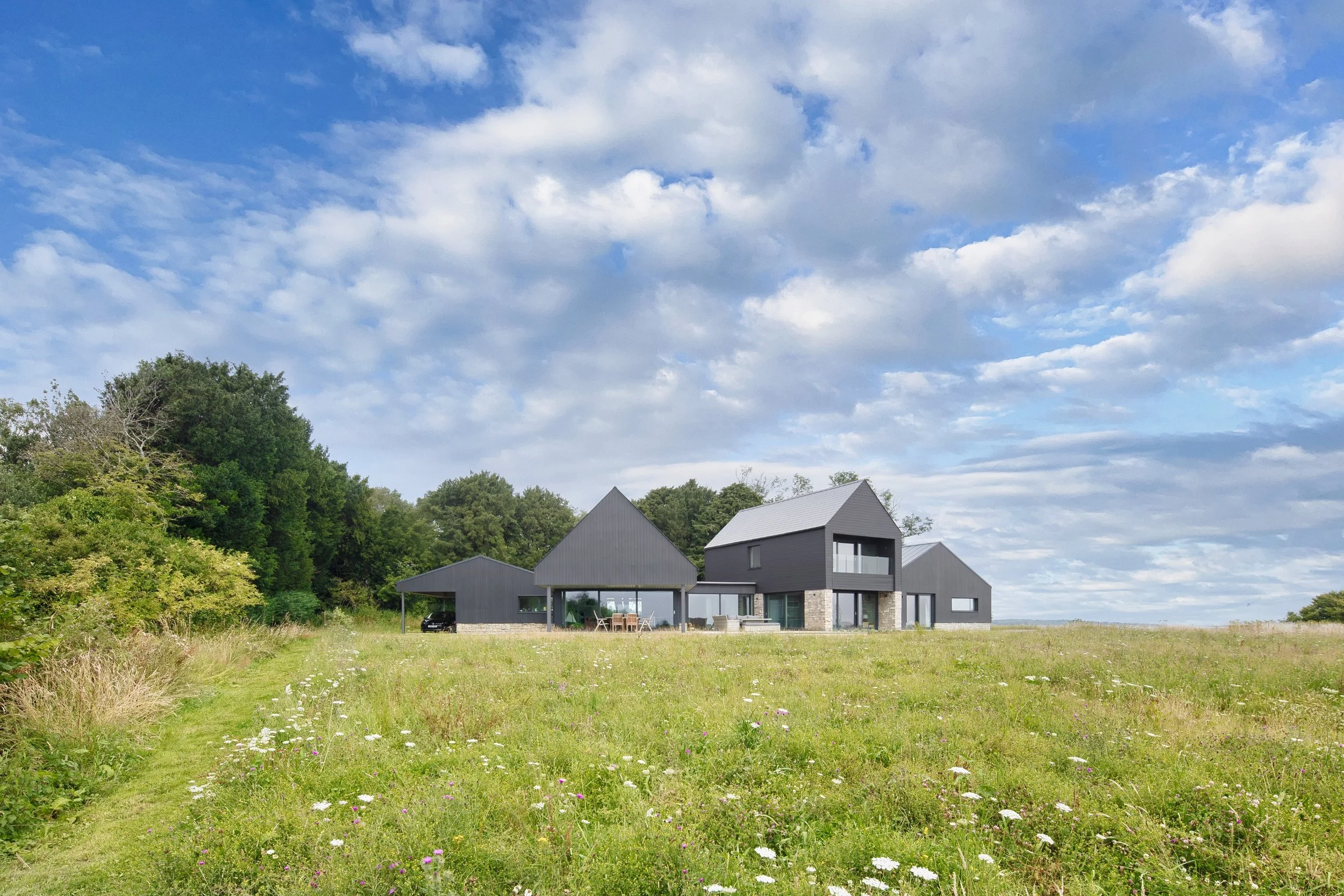
3. Consider Orientation, Sunlight and Views
The orientation of a plot can have a significant impact on how enjoyable your home will be to live in.
Think about where the sun rises and sets, and how this relates to the position of the proposed house.
A south-facing garden may initially seem ideal, but the wider opportunities are worth considering. Could the morning light be captured in the kitchen? Could the main living spaces enjoy afternoon and evening sunlight? Is there an opportunity to create sheltered outdoor spaces that can be used throughout the year?
Views are equally important.
Consider what you will see from the main living spaces, bedrooms and circulation areas. Sometimes the most interesting outlook is not the distant panorama but a mature tree, a carefully framed garden or a changing landscape.
Equally, think about what other people might see looking towards your home. Neighbouring properties, public footpaths and nearby roads can all influence privacy.
A successful bespoke home should make the most of its outlook without compromising the comfort and privacy of the people living within it.
4. Investigate Access and Infrastructure
It is easy to become distracted by the architectural possibilities of a site and overlook the practicalities of getting to it and connecting it to essential services.
Before purchasing, establish whether the plot has suitable legal and physical access.
Questions to investigate include:
Does the land have an established right of access?
Is the existing entrance suitable for construction traffic?
Will visibility splays be required?
Are water, electricity and telecommunications available nearby?
Is there access to mains drainage, or will a private treatment system be needed?
Are there easements, wayleaves or third-party rights affecting the land?
The cost of bringing services to a remote plot can be considerable, particularly where connections involve long distances or third-party land.
Access can also become a planning issue, especially on rural sites where highway safety and the character of the approach may be important considerations.
These are not necessarily reasons to discount a plot, but they should be understood and factored into your overall budget before committing.
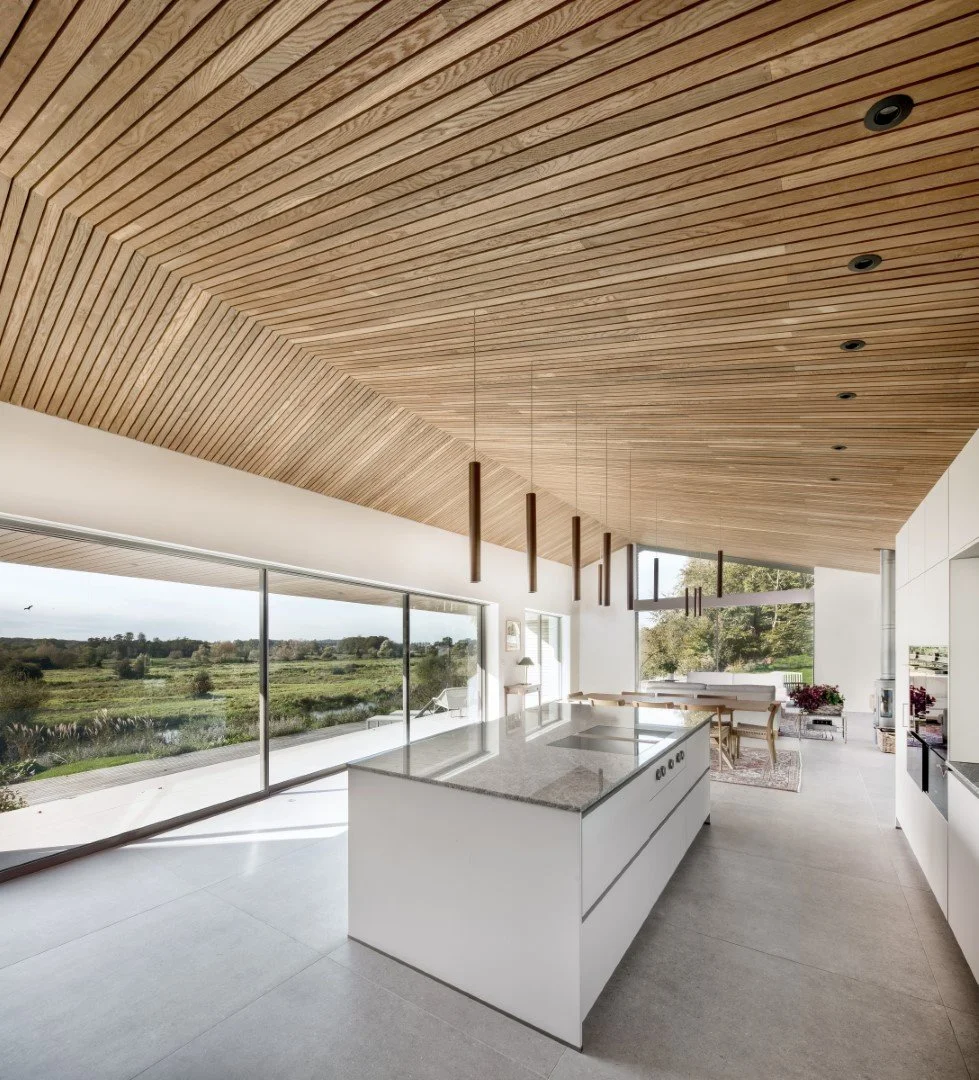
5. Understand the Ground Conditions and Environmental Constraints
What lies beneath the surface can be just as important as what you see above it.
Ground conditions influence foundation design, drainage strategies and ultimately construction costs. A site with made ground, unstable soils, a high water table or a history of contamination may require additional investigation and specialist engineering solutions.
Other considerations include:
Flood risk and surface water drainage.
Ground stability and potential subsidence.
Existing trees and their root protection areas.
Protected species and ecological habitats.
Archaeological interest.
Potential contamination from previous land uses.
Trees, for example, can be a significant asset to a site, but their position and root protection requirements may influence where a building can be located.
Similarly, ecological surveys may be required to establish whether protected species are present and whether any mitigation measures will be necessary.
Understanding these constraints early allows them to inform the design rather than become unexpected obstacles once the project is underway.
6. Think About What You Can Actually Build, Not Just What You Want
Perhaps the biggest mistake when purchasing land is deciding what house you want before understanding what the site can accommodate.
You might have a clear vision of a large contemporary home with extensive glazing, generous living spaces, a swimming pool and carefully designed gardens. But does the plot have the planning potential, physical space and budget to accommodate those aspirations?
Consider the likely footprint, overall scale, building height, relationship with neighbouring properties and the amount of external space that will remain.
It is also important to understand the distinction between the land's physical capacity and its planning capacity. A plot might physically accommodate a substantial house, but planning policy may significantly restrict its size, appearance or location.
This is where an architect's input can be invaluable.
A feasibility study can explore different ways of developing the site, considering the brief alongside its planning, landscape and technical constraints. It can help establish what is achievable before you commit to a purchase or invest heavily in a design.
Importantly, it can also reveal opportunities you may not have considered.
A challenging site could offer the opportunity for a truly exceptional home, while a seemingly straightforward plot may have hidden restrictions that make development more complicated.
Don't Forget the Budget
Although the purchase price is often the starting point, it should never be considered in isolation.
A relatively inexpensive plot could ultimately prove more costly to develop than a more expensive site with straightforward access, services and ground conditions.
When assessing the overall investment, allow for:
Land purchase price and associated legal costs.
Planning and architectural fees.
Surveys and specialist consultant fees.
Ground investigations and foundation requirements.
Utility connections and drainage infrastructure.
Construction costs and external landscaping.
Contingency for unforeseen circumstances.
It is also worth considering the cost of the house you ultimately want to build. There is little value in purchasing an ambitious plot if the remaining budget cannot deliver the quality of home you envisaged.
An architect can help establish an early project budget and identify where investment is likely to be required.
The Most Important Step: Speak to an Architect Before You Buy
One of the most valuable things you can do when considering a plot of land is involve an architect before committing to the purchase.
An experienced architect will look at the site differently from a typical purchaser. They will consider not just what is there today, but how the land could be transformed into a home that responds to its surroundings and meets your aspirations.
At AR Design Studio, we believe every successful project begins with understanding its context. Our approach is landscape-led, allowing the characteristics of each site to inform the architecture rather than forcing a predetermined design onto it.
We work with clients across the UK to assess potential sites, explore planning opportunities and develop bespoke homes that make the most of their surroundings.
Whether you are considering a rural plot, a woodland setting, a coastal location or a replacement dwelling, obtaining the right advice at the outset can make a significant difference to the success of your project.
The perfect plot isn't necessarily the one that looks best on paper. It's the one that offers the greatest opportunity to create an exceptional home.
If you are considering purchasing land to build a bespoke home, we'd be delighted to discuss its potential.